PROGRESSIVE MOVEMENT
"Ignorance and poverty are everywhere associated with disease and vice. Filth and contagion, coupled with ignorance and indifference, always bring about disease and death."
- L.C. Allen, M.D., in the article "The Negro Health Problem" (1914)
"THE NEGRO HEALTH PROBLEM"
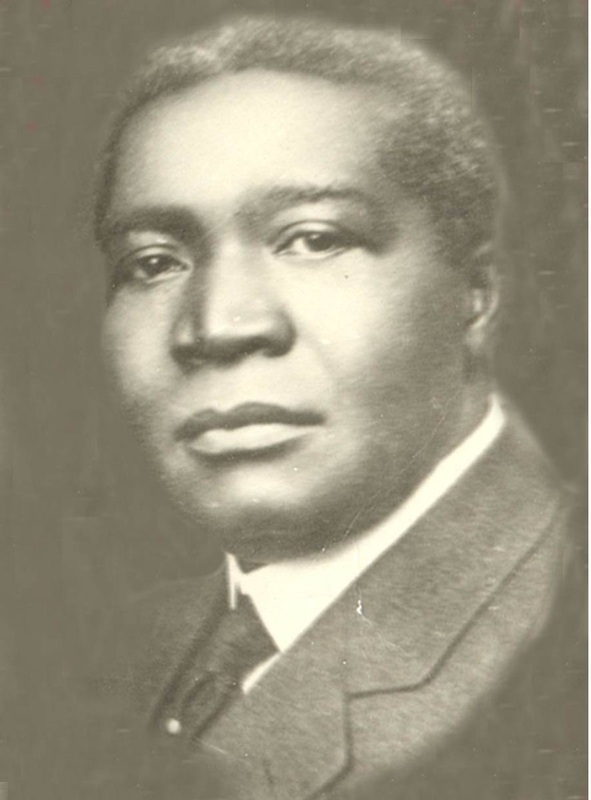
"Dr. Moton was named president of Tuskegee Institute following the death of Dr. Booker T. Washington, founder and first president, in 1915." (Image taken from tuskegee.edu.)
|
The Progressive movement, a period of reform in America from 1890 to 1920, spurred advances in many professions, including medicine. Reformers like Dr. Robert Moton advocated for programs raising medical standards in African-American communities. "The object of ours is to improve the health of Negroes and the conditions under which they live ... Although the movement had the fullest support and cooperation of the medical profession, it is an interesting fact that it was not originated in that group, and that every type of organization, from business firms to fraternal societies, shares in the effort." - Dr. Robert Moton, regarding National Negro Health Week, in
Annals of the American Academy of Political and Social Science (1925) |
"The negro is here for all time. he depends upon the white man for everything that makes up a civilization. These two statements being true, he is what the white man makes him." - Dr. W. F. Brunner, in the article "The Negro Health Problem
in the Southern Cities, Journal of the Outdoor Life" (1915) |
The negro health problem is one of the "white man's burdens," and it is by no means the least of those burdens. It is at once the most serious and the most difficult health problem with which the people of the South are confronted. - L.C. Allen, M.D., in the article
"The Negro Health Problem" (1914) |
"THE FUND"
Julius Rosenwald, a Jewish philanthropist seeking better education for African-Americans, founded the Julius Rosenwald Fund to finance his various projects.
“The greatest thing about Julius Rosenwald is not his business but himself, not what he has but what he is, his character, his personality, his sincerity, his honesty, his democracy, his thoughtfulness, his charity of heart, his catholicity of sympathy, his consuming desire to help the less fortunate of his fellow creatures.”
- B.C Forbes, journalist, on Julius Rosenwald's qualities (1916)
|
Excerpt from an NPR discussion about the Julius Rosenwald Fund
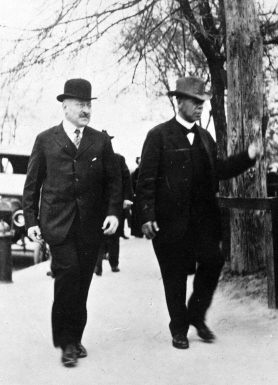
"Julius Rosenwald and Booker T. Washington" (Philanthropy Roundtable n.d.)
|
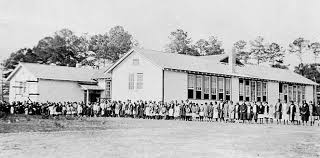
"By 1928, one in five schools for black students was a Rosenwald School." (Fisk University Archives n.d.)

"Map of Rosenwald schools throughout the South" (Philanthropy Roundtable n.d.)
|
Advised by Julius' director of medical service Dr. Michael M. Davis, the Rosenwald Fund began to fund medical research:
|
Excerpt on the lecture,"The Tuskegee Syphilis Experiment:
A Travesty of Race and Medicine" by James Jones |
"The following locations for the studies were agreed upon: - Thomas Parran, Surgeon General of the United States Public Health Service (1928)
|
"Joining with the U.S Public Health Service and the state and local departments of health, the studies supported by the Fund attempted to find the answer to eight questions: - Thomas Parran, Surgeon General of the
United States Public Health Service (1932) |
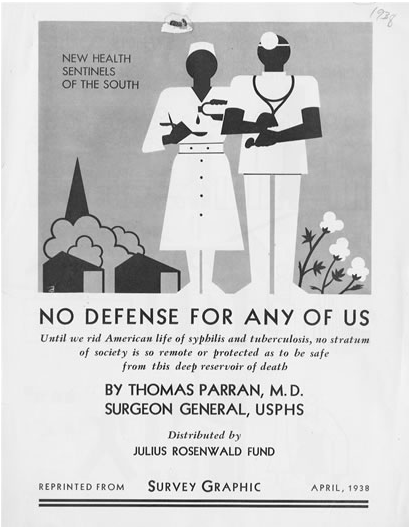
"This is an article reprint of a piece by Parran in Survey Graphic. It addresses the high rates of syphilis and tuberculosis in the African American community" (Venereal Disease Visual History Archive 1938)
|
However, after the surveys were conducted "the economic crunch of the Great Depression" caused "The Rosenwald trustees' decision to pull out of the syphilis control program" (Rosenkrantz 1983).
Among the many interests of the late Julius Rosenwald was the health and welfare of the American Negro. From the fund that now carries his name came money which was used in cooperation with Federal, State, and local health departments for a survey of the prevalence of syphilis among Negroes. One county in each of six southern states was chosen for the study. The highest rate was found in Macon Country, Alabama. Not only was the prevalence higher, but it was found that only one out of 25 had received treatment.
- Dr. Oliver Wenger, doctor in the Tuskegee Syphilis Study, in a speech to the Hot Springs Seminar (1950)